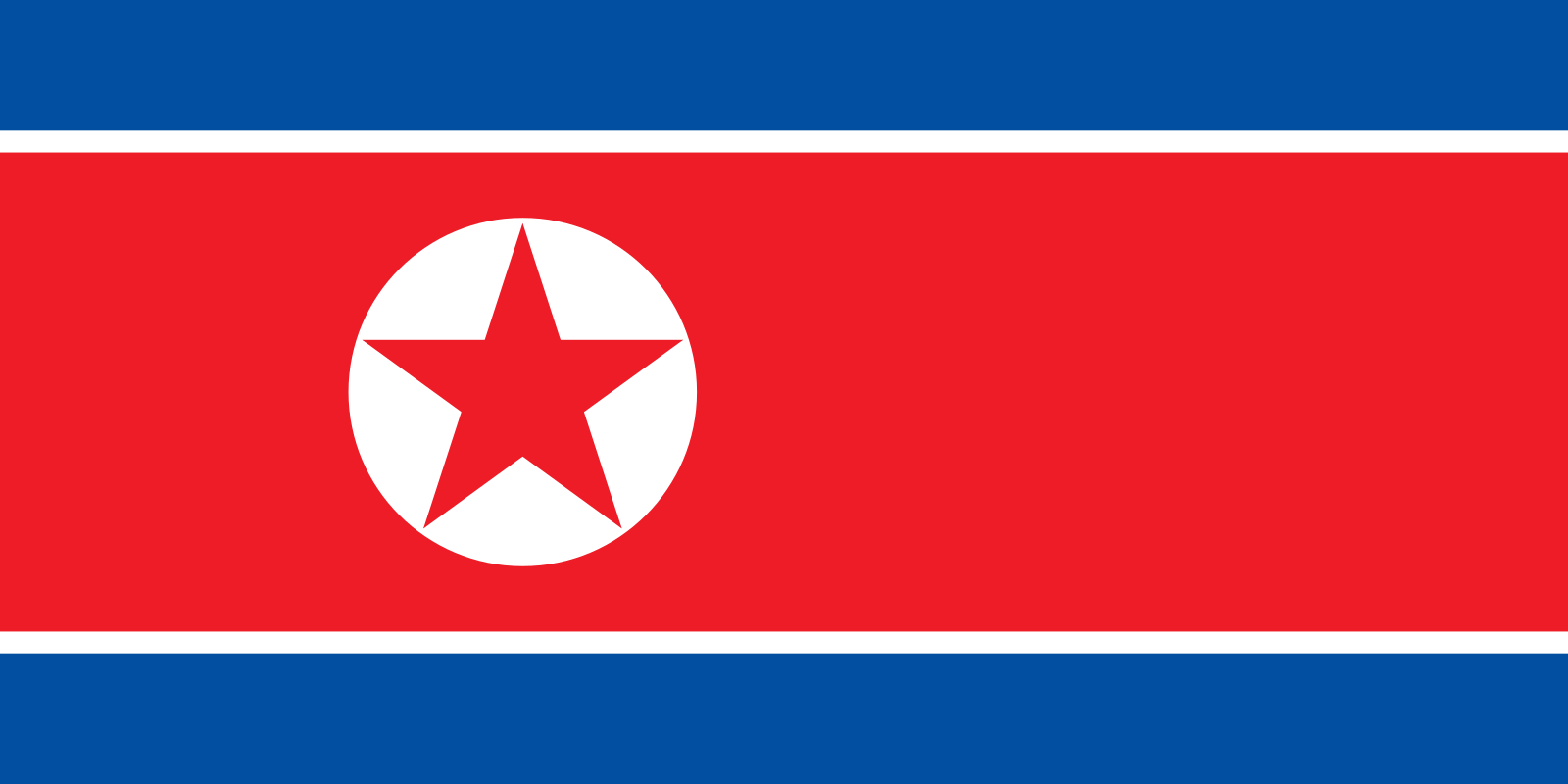
Kaech’ŏn is a city located in South P’yŏngan Province, North Korea. It is part of the larger administrative region of P’yŏngnam. The city has a rich history, although detailed information is somewhat limited due to the secretive nature of the North Korean regime.
Historical Background
Kaech’ŏn, like many areas in Korea, has a history that is intertwined with the broader history of Korea. It has been influenced by various Korean dynasties, including the Goryeo and Joseon periods, when Korea was a unified kingdom.
Modern Era
In the modern era, particularly during the Japanese occupation of Korea from 1910 to 1945, Kaech’ŏn, like the rest of Korea, was under Japanese control. Following the end of World War II, Korea was divided into two zones, which eventually became North and South Korea. Kaech’ŏn became part of North Korea.
Significant Events
- Post-Korean War Development: After the Korean War (1950-1953), Kaech’ŏn, like much of North Korea, underwent significant reconstruction and industrialization as part of the country's efforts to rebuild and develop its economy under the leadership of Kim Il-sung.
- Industrial Growth: The city has been known for its coal mining activities, which form a significant part of its local economy. Coal mining and related industries have historically been important for North Korea's economy.
Important Landmarks
- Kaech’ŏn Concentration Camp (Kwan-li-so No. 14): This is one of the most notorious political prison camps in North Korea. It is a large facility where political prisoners and their families are reportedly held under harsh conditions. The existence of such camps is well-documented by defectors and international human rights organizations, although access and information are tightly controlled by the North Korean government.
Notable Figures
Due to the lack of transparency and the secretive nature of the North Korean regime, specific historical figures from Kaech’ŏn are not well-documented in public sources.
Current Status
Today, Kaech’ŏn continues to be an important industrial city within North Korea. The city’s economy relies heavily on mining and manufacturing. However, like much of North Korea, it remains largely closed to the outside world, and detailed information about everyday life and governance is scarce.
Conclusion
While Kaech’ŏn has a significant role within North Korea due to its industrial capabilities, particularly in coal mining, detailed historical and cultural information is limited. The city’s history is closely tied to the broader narrative of North Korea’s economic and political developments.
Information not available beyond this summary.