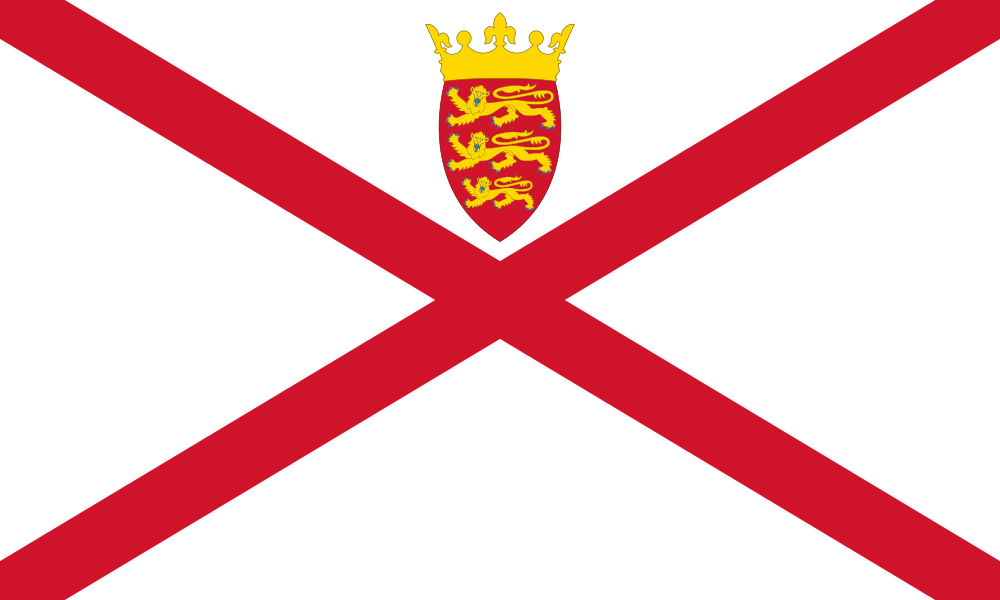
Jersey
· JE

Jersey

Jersey

Welcome to Jersey, a beautiful island nestled in the English Channel off the coast of France. Known for its stunning landscapes, rich history, and unique blend of British and French influences, Jersey is a must-visit des…

#Channel Islands#United Kingdom#Island#Coastal#Historic
1/5

Top hotels & flights

Hand-picked stays and the best fares into Jersey.

Top Hotels in Saint Helier

Top Flights to Saint Helier

Popular activities

Tours, tickets and experiences travelers book most in Jersey.

Tours

Explore The Island's Castles

Visit the medieval castles of Jersey, offering breathtaking views and historical insights.

Jersey Museum & Art Gallery

Discover Jersey's rich history and art exhibits.

Durrell Wildlife Park

Visit the famous wildlife park dedicated to animal conservation.

Shopping

Shopping Spree at St. Helier

Explore a variety of shops in the bustling town of St. Helier.

Outdoor

Coastal Windsurfing Adventure

Experience the thrill of windsurfing along Jersey's scenic coastlines.

Location videos

Real reels from travelers, plus longer watches to get the full picture.

From travelers
Watch & explore

Practical info

The essentials for planning your time in Jersey.

Currency
£ | GBP | Pound Sterling
Population
The approximate estimated total population of Jersey is '0.1 million'.
Languages
English, French, Portuguese
Average weather
Jersey
Jan
rain
9°4°
Feb
rain
9°3°
Mar
cloud
11°4°
Apr
cloud
13°6°
May
sun
16°8°
Jun
sun
19°11°
Jul
sun
21°14°
Aug
sun
21°14°
Sep
sun
19°12°
Oct
cloud
16°10°
Nov
rain
12°7°
Dec
rain
10°5°

Local guide

What travelers love, what to watch for, and a deeper read on Jersey.

What people love

Sure, here are some pros of traveling to Jersey, the largest of the Channel Islands located in the English Channel:

  1. Scenic Beauty: Jersey is known for its stunning coastline with golden sandy beaches, rugged cliffs, and crystal-clear waters. The island also boasts beautiful countryside with rolling hills, fields of wildflowers, and picturesque villages.

  2. Outdoor Activities: Jersey offers a wide range of outdoor activities such as hiking, cycling, surfing, kayaking, and paddleboarding. The island's diverse landscape provides plenty of opportunities for adventure and exploration.

  3. Rich History and Culture: Jersey has a fascinating history dating back thousands of years, with influences from Celtic, Roman, Viking, and Norman cultures. Visitors can explore historic sites such as castles, museums, and ancient dolmens.

  4. Culinary Delights: Jersey is renowned for its fresh seafood, including lobster, crab, and oysters. The island also produces delicious dairy products such as Jersey Royal potatoes and famous Jersey cream.

  5. Relaxing Environment: With its laid-back atmosphere and slower pace of life, Jersey is the perfect destination for those looking to unwind and recharge. Visitors can enjoy peaceful walks along the beach, spa treatments, and yoga retreats.

Overall, traveling to Jersey offers a unique blend of natural beauty, outdoor activities, history, culture, and culinary experiences, making it an ideal destination for a memorable vacation.

What to know

Traveling to Jersey, located in the Channel Islands, does have some potential cons to consider:

  1. Limited transportation options: Jersey is a relatively small island, and while it does have a public bus system and taxis, the options for getting around may be more limited compared to larger destinations.

  2. Weather can be unpredictable: Being located in the English Channel, Jersey's weather can be changeable and unpredictable, which may impact outdoor activities and sightseeing plans.

  3. Higher cost of living: Jersey is known for having a higher cost of living compared to mainland UK, so travelers may find that expenses such as accommodation, dining, and activities are relatively more expensive.

  4. Crowded during peak tourist seasons: Like many popular tourist destinations, Jersey can get crowded during peak seasons, which may impact the overall experience for some travelers looking for a more relaxed or secluded getaway.

  5. Limited nightlife options: While Jersey does have some bars and restaurants, the nightlife scene may not be as lively or varied compared to larger cities, which could be a drawback for travelers seeking vibrant nightlife options.

Overall, while Jersey offers beautiful scenery, historic sites, and a unique island experience, travelers should be aware of these potential cons when planning their trip.

Jersey is an island in the English Channel, and it is the largest of the Channel Islands. It has a rich and complex history due to its strategic location and its status as a Crown Dependency of the United Kingdom. Here is a detailed history of Jersey, along with significant events, historical figures, and important landmarks:

Prehistoric and Early History

  • Prehistoric Era: Evidence of human activity on Jersey dates back to approximately 250,000 years ago. The island has several Neolithic sites, such as La Hougue Bie, which is one of the best-preserved passage graves in Europe.
  • Roman Period: There is limited evidence of Roman occupation, though some artifacts suggest contact with Roman traders.

Medieval Period

  • Duchy of Normandy: In 933, Jersey became part of the Duchy of Normandy. The Channel Islands were granted to the Duchy by the King of France.
  • 1066: After William the Conqueror, Duke of Normandy, became King of England, the Channel Islands became possessions of the English Crown, though they remained part of the Duchy of Normandy.

The Hundred Years' War and Aftermath

  • 1337-1453: During the Hundred Years' War, Jersey was frequently attacked by French forces.
  • Battle of Jersey: On January 6, 1781, a notable event occurred when French forces attempted to invade Jersey. British forces, led by Major Peirson, successfully repelled the invasion. Peirson was killed in the battle, and his heroism is commemorated in John Singleton Copley's painting "The Death of Major Peirson."

Early Modern Period

  • Civil War: During the English Civil War (1642–1651), Jersey was initially Royalist. King Charles II visited the island during his exile.
  • 1651: Parliamentarian forces captured Jersey, and the island finally surrendered in December 1651.

18th and 19th Century

  • Jersey prospered as a center for shipbuilding and trade. The island's neutrality allowed it to serve as a base for privateering.
  • Napoleonic Wars: The island fortified itself against potential French attacks, leading to the construction of several military structures.

World War II

  • German Occupation: During World War II, Jersey was occupied by German forces from June 1940 until May 9, 1945, which is now celebrated as Liberation Day.
  • The occupation left a significant mark on Jersey, with fortifications and tunnels, such as the Jersey War Tunnels, which serve as a museum today.

Post-War Period

  • After World War II, Jersey gradually rebuilt its economy. It developed a strong financial services sector, becoming a major offshore financial center.
  • Tourism also emerged as a significant industry, with visitors drawn to its beaches, countryside, and historical landmarks.

Significant Landmarks

  • Mont Orgueil Castle: A historic fortress overlooking the harbor at Gorey, it played a key role in the island's defense.
  • Elizabeth Castle: Located in St. Aubin's Bay, it has served as a stronghold for more than 300 years.
  • La Corbière Lighthouse: A picturesque lighthouse situated at the southwestern tip of the island.
  • Jersey Zoo: Founded by conservationist Gerald Durrell in 1959, it focuses on protecting endangered species.

Modern Jersey

  • Jersey maintains a unique political status as a Crown Dependency, with its own legal and financial systems. It is not part of the United Kingdom or the EU but has a special relationship with both.
  • The island continues to thrive as a global financial center and a popular tourist destination.

Jersey's history is marked by its strategic location and its ability to adapt and thrive through various challenges, from invasions and occupations to economic transformations.