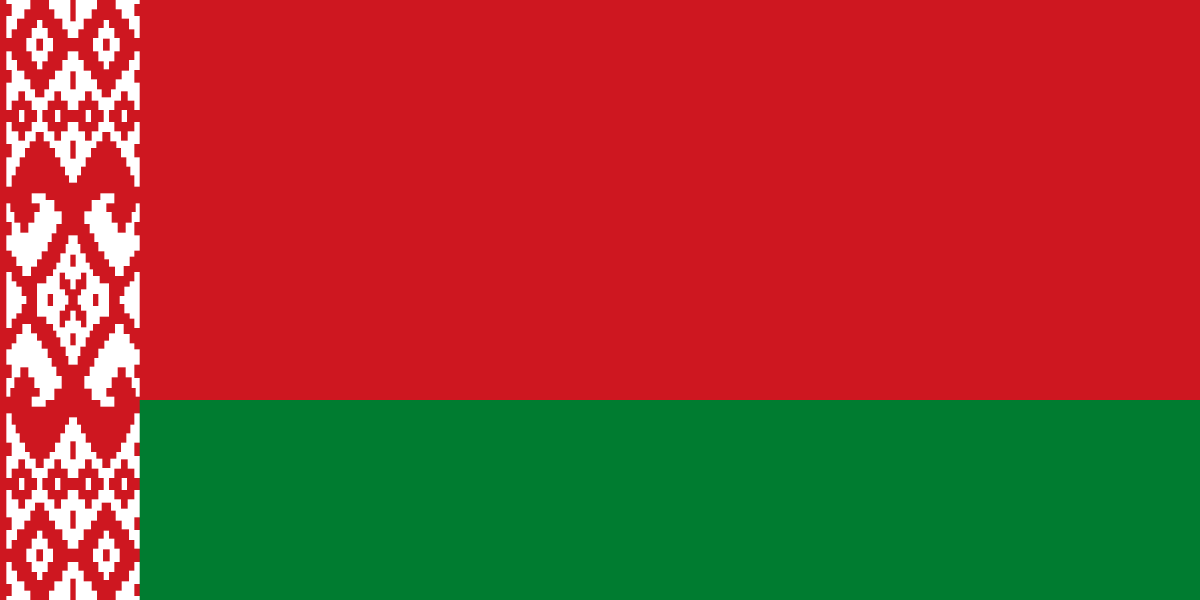
Horki, located in the Mahilyowskaya Voblasts’ (Mogilev Region) of Belarus, is a town with a rich historical background. It is known for its agricultural heritage and educational institutions, particularly in the field of agriculture.
Early History
- Founding: The exact founding date of Horki is not well-documented. However, like many settlements in the region, it likely developed during the period of the Grand Duchy of Lithuania or under Polish-Lithuanian Commonwealth influence.
- Ownership: Over the centuries, Horki, like much of Belarus, experienced shifts in sovereignty, coming under Russian control after the partitions of Poland in the late 18th century.
19th Century
- Agricultural Academy: One of the most significant events in the history of Horki was the establishment of the Gory-Gorki Agricultural School in 1840 by decree of Tsar Nicholas I of Russia. This institution later became the Belarusian State Agricultural Academy, which remains one of the oldest higher education institutions in Belarus and a key part of Horki's identity.
- Economic Development: The presence of the academy spurred economic growth and development in the area, as it attracted students and professionals.
20th Century
- World War I and II: Like much of Belarus, Horki was affected by the turmoil of the World Wars. During World War II, the town was occupied by Nazi Germany, and it suffered significant damage and loss of life.
- Post-War Period: After the war, Horki was rebuilt, and the academy resumed its role as a central institution in the town. The Soviet era brought industrialization and development, although the town remained primarily focused on agriculture and education.
Modern Era
- Post-Soviet Period: Since Belarus gained independence in 1991, Horki has continued to develop, maintaining its status as an educational and agricultural hub.
- Cultural and Educational Significance: The Belarusian State Agricultural Academy remains a prominent landmark and institution in Horki, contributing significantly to its cultural and educational landscape.
Landmarks
- Belarusian State Agricultural Academy: The academy's historic buildings and campus are the most significant landmarks in Horki, representing its long-standing educational heritage.
- Memorials: Various memorials and monuments commemorate those who suffered during the wars, reflecting the town's resilience and history.
Notable Figures
- Academics and Alumni: Many notable figures in the fields of agriculture and academia have been associated with the Belarusian State Agricultural Academy, contributing to its reputation and legacy.
Overall, Horki is a town deeply connected to its agricultural roots and educational institutions, with a history marked by resilience through periods of change and conflict. The Belarusian State Agricultural Academy stands as a testament to its lasting influence and importance in the region.