
Hannover
· DE

Hannover

Hannover, Lower Saxony, Germany

Discover Hannover: Where History Meets Modernity in a Garden Oasis Hannover, the vibrant capital of Lower Saxony, Germany, effortlessly blends a rich history with a modern, cosmopolitan spirit. Known for its sprawling g…

#Hannover#Lower Saxony#Germany#Historic city#Cultural hub
1/3

Top hotels & flights

Hand-picked stays and the best fares into Hannover.

Top Hotels in Hannover

Top Flights to Hannover

Location videos

Real reels from travelers, plus longer watches to get the full picture.

From travelers
Watch & explore

Practical info

The essentials for planning your time in Hannover.

Currency
€ | EUR | Euro
Population
0.5 million
Languages
German, English, Turkish, Russian
Average weather
Hannover
Jan
cold
3°-1°
Feb
cold
4°-1°
Mar
cloud
8°1°
Apr
cloud
13°4°
May
sun
18°8°
Jun
sun
21°12°
Jul
sun
23°14°
Aug
sun
23°13°
Sep
cloud
19°10°
Oct
cloud
14°6°
Nov
rain
8°3°
Dec
cold
4°0°

Local guide

What travelers love, what to watch for, and a deeper read on Hannover.

What people love

Hannover, located in Lower Saxony, Germany, offers a variety of attractions and activities for visitors to enjoy. Some of the pros of traveling to Hannover include:

  1. Historical Sites: Hannover has a rich history dating back to medieval times, with many historical sites to explore such as the Herrenhausen Gardens, Marienburg Castle, and the Old Town.

  2. Cultural Events: The city is known for its vibrant cultural scene, with numerous museums, galleries, and theaters to visit. Hannover also hosts various festivals and events throughout the year, including the popular Maschsee Lake Festival.

  3. Green Spaces: Hannover is a green city with many parks and gardens, providing a peaceful retreat from the urban hustle. The Eilenriede Forest, one of Europe's largest urban forests, offers opportunities for hiking, biking, and picnicking.

  4. Shopping and Dining: Hannover boasts a diverse range of shopping options, from high-end boutiques to local markets. Visitors can also indulge in traditional German cuisine at the city's many restaurants and beer gardens.

  5. Accessibility: Hannover is well-connected by public transportation, making it easy to explore the city and its surrounding areas. The city also has a modern infrastructure, making it convenient for travelers.

Overall, Hannover offers a mix of history, culture, nature, and modern amenities, making it a great destination for travelers looking to experience a unique German city.

What to know

Traveling to Hannover, located in Lower Saxony, Germany, may have some potential cons to consider:

  1. Weather: Hannover experiences a temperate maritime climate with mild summers and cool winters. The weather can be quite unpredictable with frequent rain showers. If you prefer a more consistent climate, this could be a drawback.

  2. Language Barrier: While many people in Hannover speak English, especially in tourist areas, you may still encounter language barriers when communicating with locals. It could be challenging to navigate certain situations without knowing German.

  3. Limited Nightlife: Compared to other major cities in Germany like Berlin or Munich, Hannover's nightlife scene may be considered more subdued. If you are looking for vibrant nightlife and a wide variety of entertainment options, you may find Hannover lacking in comparison.

  4. Limited Tourist Attractions: While Hannover has some interesting historical sites and museums, it may not offer as many famous landmarks or attractions as other German cities. If you are looking for a destination with numerous iconic sights to visit, you might find Hannover somewhat limited in this aspect.

  5. Public Transportation: While Hannover has a decent public transportation system, some visitors may find it less efficient or extensive compared to larger cities. Depending on where you stay and what you plan to see, you may need to rely more on walking or taxis to get around.

Overall, Hannover is a charming city with its own unique character, but it may not offer the same level of excitement or diversity of experiences as other larger German cities.

Hannover, the capital of Lower Saxony in Germany, has a rich and varied history that dates back several centuries. Here is a detailed history of the city, highlighting significant events, historical figures, and important landmarks:

Early History

  • Medieval Origins: Hannover began as a small medieval village on the east bank of the River Leine. It was first mentioned in historical records in 1150. It developed as a trading settlement due to its strategic location on the river and was granted town rights in 1241.

The Principality and Electorate of Hanover

  • Principality of Calenberg: By the 17th century, Hannover had become part of the Principality of Calenberg, a subdivision of the Duchy of Brunswick-Lüneburg.
  • Electorate of Hanover: In 1692, it was elevated to the status of an Electorate within the Holy Roman Empire. This marked the beginning of a significant period in Hannover's history.
  • Personal Union with Great Britain: In 1714, Elector George Louis of Hanover ascended to the British throne as King George I, initiating the personal union between Britain and Hanover that lasted until 1837.

19th Century

  • Napoleonic Wars: During the Napoleonic Wars, Hannover was occupied by French forces and was briefly part of the Kingdom of Westphalia.
  • Congress of Vienna: After the fall of Napoleon, the Congress of Vienna in 1815 elevated the Electorate of Hanover to a kingdom.
  • End of Personal Union: The personal union with Britain ended in 1837 when Queen Victoria ascended the British throne, as Hanoverian laws prevented a female from inheriting the Hanoverian throne.

20th Century

  • World War II: Hannover suffered extensive damage during World War II, with much of the city center destroyed by Allied bombings. Rebuilding efforts in the post-war years led to a modernized cityscape.
  • Post-war Period: After the war, Hannover became part of the newly founded state of Lower Saxony in 1946.
  • Industrial Growth: The city developed into an important industrial and commercial center in post-war Germany. It is known for hosting significant trade fairs, such as the Hannover Messe.

Landmarks and Cultural Heritage

  • Royal Gardens of Herrenhausen: These Baroque gardens are one of the city's most famous landmarks, reflecting the grandeur of the former Hanoverian court.
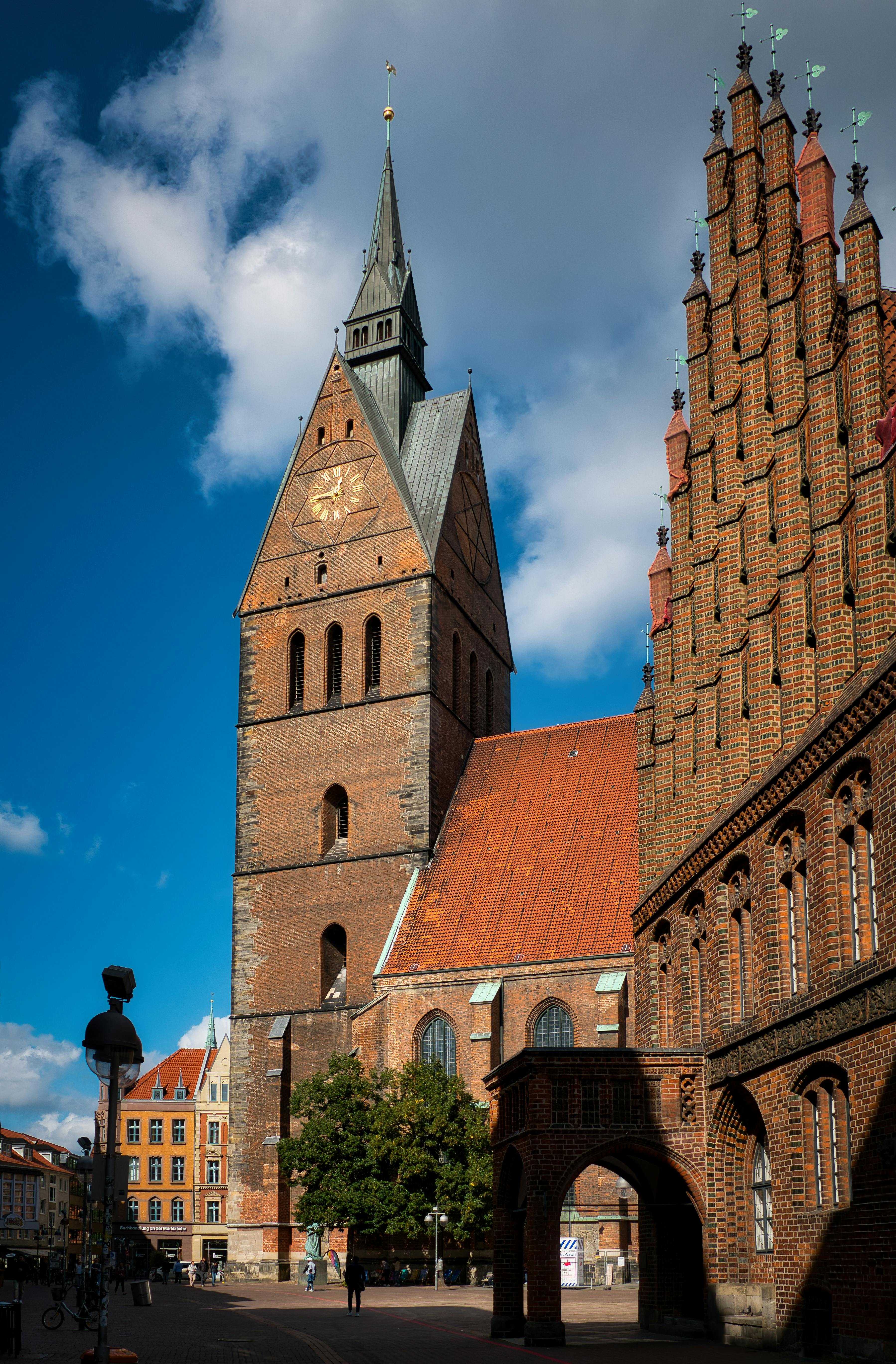
  • Marktkirche (Market Church): Dating back to the 14th century, this Gothic-style church is one of Hannover’s oldest buildings.
  • New Town Hall (Neues Rathaus): Completed in 1913, this iconic building is a symbol of Hannover and offers panoramic views of the city.
  • Maschsee: An artificial lake created in the 1930s, it is a popular recreational area for both locals and visitors.

Modern Hannover

  • EXPO 2000: Hannover gained international attention when it hosted the World Exposition in 2000, which spurred further development and modernization.
  • Cultural Scene: Today, Hannover is recognized for its vibrant cultural scene, including numerous museums, theaters, and music festivals.

Notable Figures

  • Gottfried Wilhelm Leibniz: The renowned philosopher and mathematician worked in Hannover as a librarian and historian for the House of Hanover.
  • Georg Friedrich Händel: The famous composer spent time in Hannover before establishing his career in London.

Hannover continues to be an important cultural and economic hub in Germany, known for its architecture, green spaces, and historical significance.