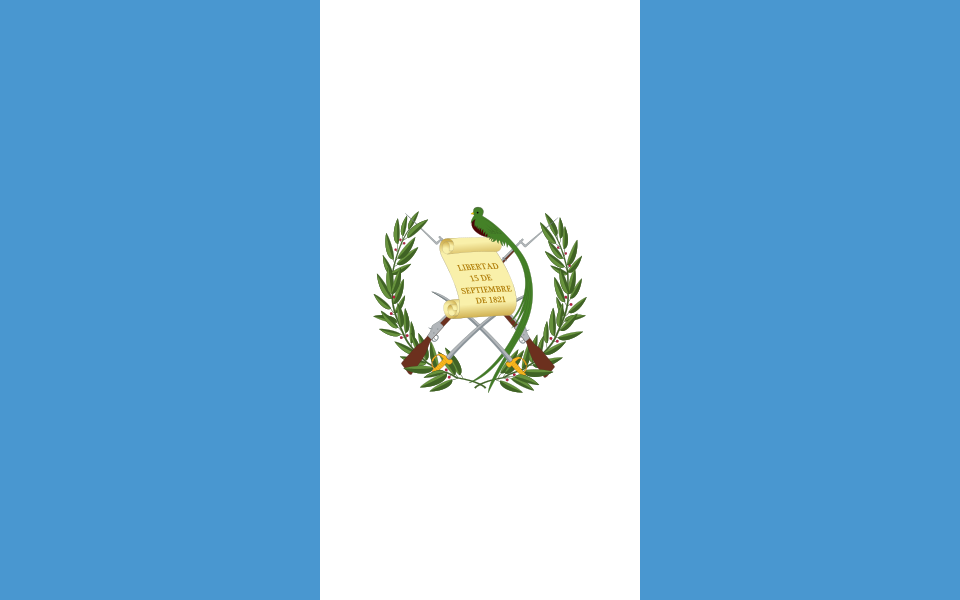
Guatemala City
· GT

Guatemala City

Guatemala City, Guatemala, Guatemala

Discover the Heart of Maya Culture: Guatemala City Vibrant and captivating, Guatemala City is a metropolis teeming with contrasts. Ancient Mayan history intertwines with modern bustle, offering a unique travel experience…

#Central America#Capital City#Historic Sites#Cultural Center#Mayan Heritage
1/5

Top hotels & flights

Hand-picked stays and the best fares into Guatemala City.

Top Hotels in Guatemala City

Top Flights to Guatemala City

Popular activities

Tours, tickets and experiences travelers book most in Guatemala City.

Tours

Historical Tour of Guatemala City

Explore the rich history and culture of Guatemala City by visiting its most iconic landmarks and museums.

Shopping

Shopping Spree at Miraflores

Discover a wide range of shops and entertainment options at one of the city's premier shopping centers.

Outdoor

Outdoor Adventure at Pacaya Volcano

Hike one of Guatemala's most active volcanoes and enjoy breathtaking views from the summit.

Location videos

Real reels from travelers, plus longer watches to get the full picture.

From travelers
Watch & explore

Practical info

The essentials for planning your time in Guatemala City.

Currency
Q | GTQ | Guatemalan Quetzal
Population
3 million
Languages
Spanish, Spanish, English, Mayan Languages
Average weather
Guatemala City
Jan
clear
23°12°
Feb
clear
24°12°
Mar
clear
26°13°
Apr
sun
27°15°
May
rain
26°16°
Jun
rain
25°16°
Jul
rain
24°15°
Aug
rain
25°15°
Sep
rain
24°15°
Oct
rain
24°15°
Nov
cloud
23°14°
Dec
clear
23°12°

Local guide

What travelers love, what to watch for, and a deeper read on Guatemala City.

What people love

Traveling to Guatemala City in Guatemala has several advantages, including:

  1. Rich Culture and History: Guatemala City is the capital and largest city of Guatemala, offering a vibrant mix of Mayan and colonial history. Visitors can explore historical sites such as the National Palace, the Metropolitan Cathedral, and the archaeological site of Kaminaljuyu.

  2. Natural Beauty: Guatemala City is surrounded by stunning natural landscapes, including volcanoes, mountains, and lakes. Visitors can take day trips to explore attractions such as Pacaya Volcano, Lake Atitlán, and the Tikal National Park.

  3. Authentic Cuisine: Guatemala City is known for its delicious and diverse cuisine, influenced by Mayan, Spanish, and African traditions. Visitors can sample traditional dishes such as tamales, chuchitos, and pepian while exploring local markets and restaurants.

  4. Art and Handicrafts: Guatemala City is a hub for traditional arts and crafts, including handwoven textiles, pottery, and wood carvings. Visitors can shop for unique souvenirs at local markets such as Mercado Central and Mercado de Artesanias.

  5. Warm Hospitality: Guatemalan people are known for their warm and welcoming hospitality, making visitors feel at home during their stay in Guatemala City. Travelers can interact with locals, learn about their traditions, and immerse themselves in the local culture.

Overall, traveling to Guatemala City offers a rich cultural experience, stunning natural beauty, delicious cuisine, unique shopping opportunities, and the chance to connect with friendly locals.

What to know

Traveling to Guatemala City, like any other destination, has its risks and challenges. Here are some of the cons you may encounter when visiting Guatemala City:

  1. Safety Concerns: Guatemala City has a reputation for high crime rates, including theft, robbery, and violent crime. Travelers need to be cautious, especially in certain areas known for criminal activities.

  2. Traffic Congestion: Guatemala City is notorious for its heavy traffic, especially during rush hours. Navigating through the city can be time-consuming and frustrating, making it challenging to move around efficiently.

  3. Air Pollution: The city suffers from significant air pollution due to traffic congestion and industrial activities. This can affect individuals with respiratory issues and may impact the overall air quality in the city.

  4. Limited Infrastructure: Despite efforts to improve infrastructure, Guatemala City still faces challenges with inadequate public transportation, unreliable services, and poor road conditions in some areas.

  5. Health Concerns: Travelers to Guatemala City should be cautious about food and water hygiene to avoid gastrointestinal illnesses. The healthcare system may not be as robust as in other countries, and access to quality medical care could be limited.

  6. Language Barrier: While many people in Guatemala City may speak some English, the primary language is Spanish. Travelers who do not speak Spanish may face challenges in communication, which could be a barrier in certain situations.

  7. Natural Disasters: Guatemala is prone to natural disasters such as earthquakes, volcanic eruptions, and tropical storms. Travelers should be aware of the potential risks and have a plan in place in case of emergencies.

While Guatemala City has its cons, it also offers unique cultural experiences, historical sites, and natural beauty that can make it a rewarding destination for travelers. It's essential to be well-prepared, stay informed about the local conditions, and take necessary precautions to have a safe and enjoyable trip.

Guatemala City, the capital of Guatemala, has a rich and complex history that reflects the broader historical trajectory of the country. It is located in the department of Guatemala and is the largest city in Central America by population. Below is a detailed history of Guatemala City, including significant events, historical figures, and important landmarks.

Pre-Columbian and Colonial Era:

  • The area around present-day Guatemala City was originally inhabited by the Maya civilization. The ancient city of Kaminaljuyú, now an archaeological site within the modern city, was a major Maya city that flourished from around 1500 BC to approximately 1200 AD.
  • After the Spanish conquest of the region in the 16th century, the capital of the Captaincy General of Guatemala was established in Santiago de los Caballeros (modern-day Antigua Guatemala) in 1543.

Establishment of Guatemala City:

  • On July 29, 1773, a devastating earthquake, known as the Santa Marta earthquake, struck Santiago de los Caballeros, leading to a decision to move the capital to a safer location.
  • The new capital, officially named La Nueva Guatemala de la Asunción, was established in 1776 at its current location. It was built on the site of the Pueblo Viejo of the indigenous people.

19th Century:

  • Guatemala declared independence from Spain on September 15, 1821. Initially, it joined the First Mexican Empire, but after its collapse, it became part of the United Provinces of Central America.
  • In 1847, Guatemala became an independent republic with Guatemala City as its capital.
  • Throughout the 19th century, Guatemala City grew as political instability and civil unrest characterized the region. Notable figures during this time included Rafael Carrera, who served as president of Guatemala and was instrumental in setting the country’s early policies.

20th Century:

  • The city saw significant modernization and growth during the 20th century, especially under President Jorge Ubico (1931-1944), who implemented various infrastructure projects.
  • In 1944, a revolution overthrew the Ubico regime, leading to a decade of democratic governance known as the "Ten Years of Spring," characterized by social reforms and modernization efforts.
  • The U.S.-backed coup in 1954 ousted President Jacobo Árbenz and led to decades of military rule and civil strife, known as the Guatemalan Civil War (1960-1996). The city was often at the center of political activity and unrest during this period.
  • A major earthquake in 1976 caused widespread destruction in Guatemala City, killing thousands and leading to significant rebuilding efforts.

21st Century:

  • Post-war Guatemala City has seen rapid urbanization and population growth. It remains the political, economic, and cultural hub of the country.
  • The city has struggled with challenges typical of rapidly growing urban centers, including traffic congestion, pollution, and crime.

Important Landmarks:

  • Kaminaljuyú: An ancient archaeological site representing the city's pre-Columbian heritage.
  • Catedral Metropolitana: Located in the main plaza, this neoclassical cathedral is a prominent symbol of the city.
  • Palacio Nacional de la Cultura: Formerly the presidential palace, it is now a museum and a central landmark.
  • Parque Central: The historic center of Guatemala City, featuring important government buildings and cultural sites.
  • Museo Nacional de Arqueología y Etnología: Houses important artifacts from Guatemala's Maya past.

Guatemala City continues to be a vital center for Guatemala's cultural and political life, reflecting both its historical roots and its modern complexities.