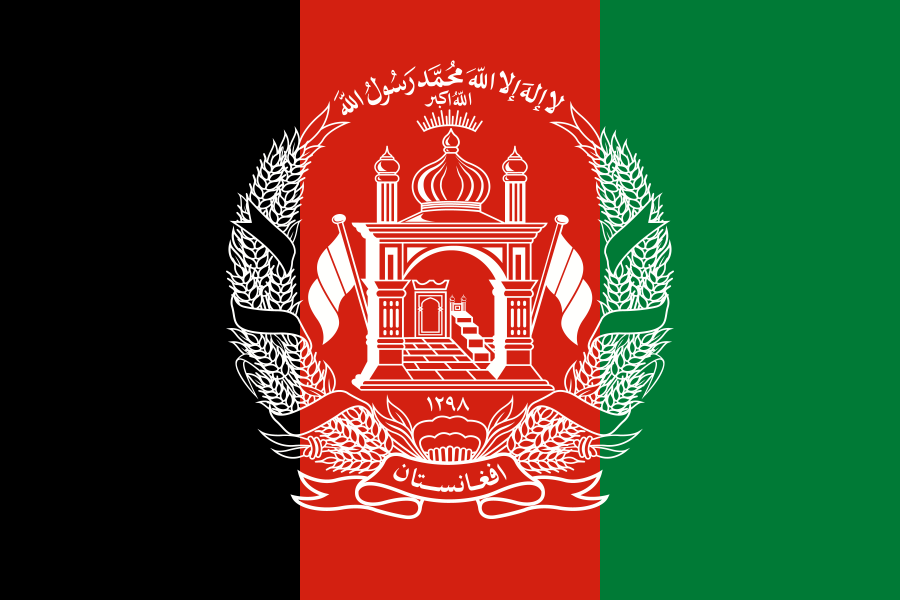
· AF

Ghōr

Ghōr, Afghanistan

Ghōr, located in Afghanistan, is a hidden gem waiting to be explored by adventurous travelers seeking off-the-beaten-path destinations. The province of Ghōr is nestled in the central part of the country and offers a uniq…

#Ghōr#Afghanistan#mountainous region#remote location#rural area

Top hotels & flights

Hand-picked stays and the best fares into Ghōr.

Top Hotels in Ghōr

Top Flights to Ghōr

Popular activities

Tours, tickets and experiences travelers book most in Ghōr.

Tours

Visit Jam Minaret

Explore the historic Jam Minaret, a UNESCO World Heritage Site, known for its intricate brickwork and historical significance.

Shopping

Explore Ghor's Local Bazaar

Shop for traditional Afghan crafts and goods in Ghor's bustling local market.

Outdoor

Hiking in Band-e Amir National Park

Enjoy breathtaking landscapes and serene lakes in Afghanistan's first national park.

Location videos

Real reels from travelers, plus longer watches to get the full picture.

From travelers
Watch & explore

Practical info

The essentials for planning your time in Ghōr.

Currency
؋ | AFN | Afghan Afghani
Population
Not Available
Languages
Persian, Dari, Pashto

Local guide

What travelers love, what to watch for, and a deeper read on Ghōr.

What people love

Information not available.

What to know

Traveling to Ghōr, Afghanistan, presents several challenges and potential risks. Here are some of the cons to consider:

  1. Security Concerns: Afghanistan has been experiencing ongoing conflict and instability for years, and security remains a significant concern. The threat of terrorism, armed conflict, and crime is high, and travelers may face risks from militant groups operating in the region.

  2. Infrastructure: Ghōr, like many parts of Afghanistan, has limited infrastructure. Roads may be in poor condition, and transportation options can be unreliable. This can make travel within the province difficult and time-consuming.

  3. Healthcare: Access to healthcare facilities in Ghōr is limited. In the event of illness or injury, medical services may be insufficient, and evacuation to a location with adequate medical care could be challenging.

  4. Communication: Communication infrastructure may be underdeveloped. Internet access can be sporadic, and mobile network coverage might be limited, making it difficult to stay connected.

  5. Accommodation: Options for accommodation might be limited, and the quality may not meet international standards. Visitors may have to adjust to basic living conditions.

  6. Cultural Sensitivities: Afghanistan has a complex cultural and social environment. Travelers need to be aware of and sensitive to local customs and traditions, which might be very different from their own.

  7. Government Travel Warnings: Many governments issue travel advisories against non-essential travel to Afghanistan due to the security situation. Travelers should check these advisories before planning a trip.

Due to these factors, potential travelers should carefully assess the risks and take necessary precautions if considering a trip to Ghōr or any part of Afghanistan.

Ghōr, located in central Afghanistan, is a region with a rich and varied history. The province has been inhabited since ancient times and has played a significant role in the historical and cultural development of the region. Here is a detailed history of Ghōr, including significant events, historical figures, and important landmarks:

Ancient and Medieval History

  1. Pre-Islamic Era: The region of Ghōr has been inhabited since ancient times, with evidence of early settlements. It was historically part of the larger region known as Arachosia, which was influenced by various empires, including the Achaemenids and later the Greco-Bactrian Kingdom.

  2. Islamic Conquest: The spread of Islam in the region began in the 7th and 8th centuries. Ghōr was gradually incorporated into the Islamic cultural and political sphere.

  3. The Ghurid Dynasty (12th-13th Century): Ghōr is perhaps best known for being the origin of the Ghurid dynasty, which rose to prominence in the 12th century. The Ghurids were originally a local dynasty that expanded their rule over a large part of the Indian subcontinent. Two of the most significant figures from this period are:

    • Sultan Ghiyath al-Din Muhammad: He was instrumental in expanding Ghurid influence into northern India.
    • Sultan Mu'izz al-Din Muhammad (Muhammad of Ghor): Known for his campaigns in India, he played a crucial role in laying the foundation for Muslim rule in the Indian subcontinent, which eventually led to the establishment of the Delhi Sultanate.
  4. Decline and Mongol Invasion: After the death of Sultan Mu'izz al-Din, the Ghurid Empire struggled with internal conflicts and was eventually weakened by the Khwarazmian invasion and the Mongol invasions in the early 13th century.

Modern History

  1. Timurid and Mughal Influence: After the fall of the Ghurids, the region came under the influence of the Timurids and later the Mughals, although it remained a somewhat peripheral area due to its rugged terrain.

  2. 19th and 20th Century: Ghōr, like much of Afghanistan, experienced periods of instability and conflict, including during the Anglo-Afghan wars and later during the Soviet-Afghan War (1979-1989).

  3. Post-2001 Era: Following the US-led invasion of Afghanistan in 2001, Ghōr has been part of international and national efforts to stabilize the country. However, it has faced challenges related to security, governance, and development.

Landmarks and Cultural Heritage

  1. Jam Minaret: One of the most significant landmarks in Ghōr is the Minaret of Jam, a UNESCO World Heritage Site. It is a remarkable example of Islamic architecture from the 12th century and stands in a remote area of the province. The minaret is noted for its intricate brickwork and inscriptions.

  2. Historical Forts and Ruins: The region contains several ancient forts and ruins that reflect its historical importance, though many are in a state of disrepair due to conflict and lack of preservation efforts.

  3. Natural Landscapes: Ghōr is known for its rugged and mountainous landscapes, which have historically acted as natural fortifications against invaders.

Ghōr's history is marked by periods of significant cultural and political influence, particularly during the Ghurid era. Despite the challenges it has faced, the region remains an important part of Afghanistan's historical and cultural heritage.