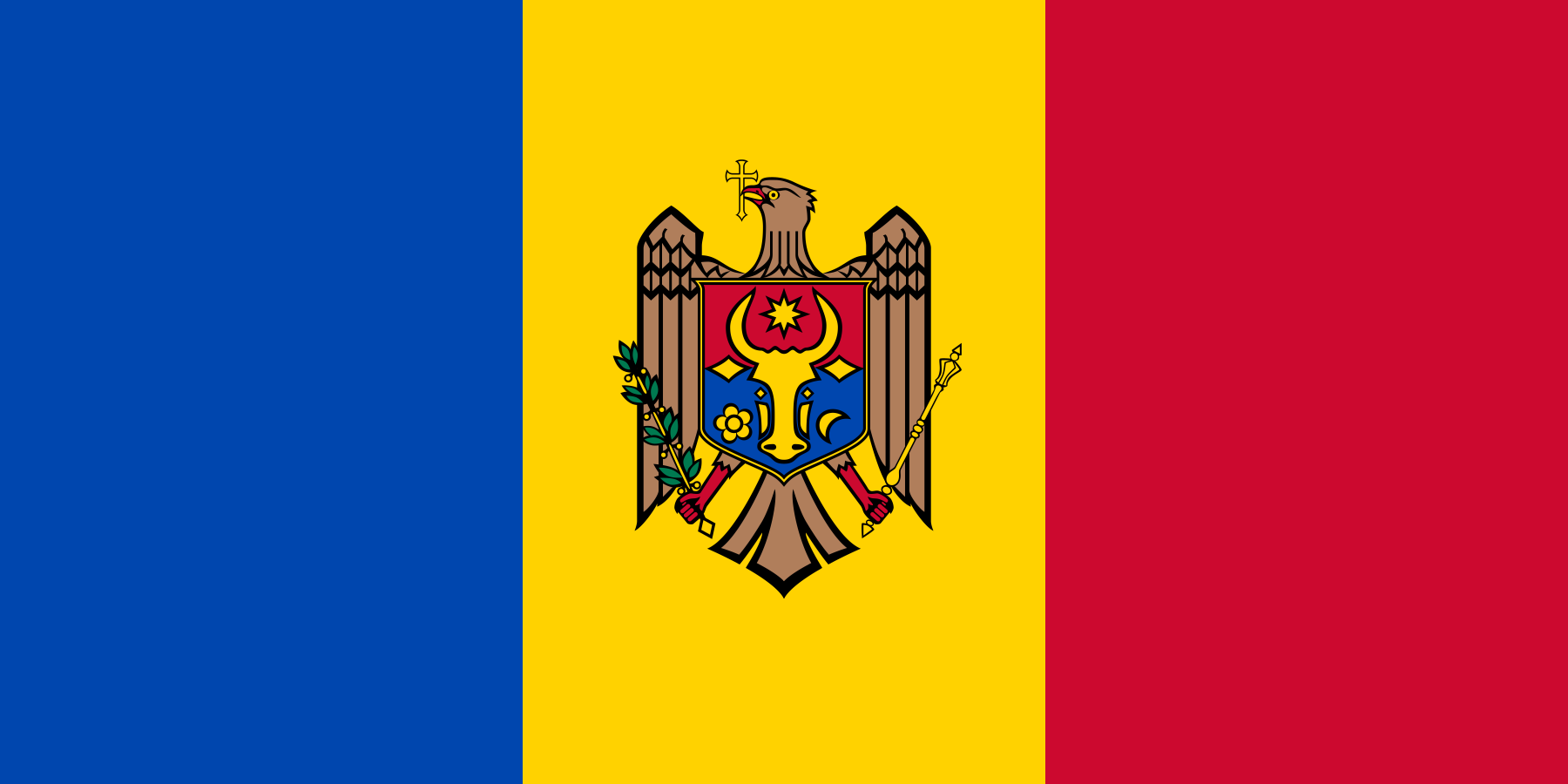
Florești, located in the north of Moldova, is a town with a rich history that reflects the broader historical changes in the region. However, comprehensive detailed historical records on Florești specifically are limited, and much of its history is intertwined with the broader history of Moldova and the surrounding regions.
Historical Background:
-
Early History: The area where Florești is located has been inhabited since ancient times, with evidence of settlements dating back to the Dacians. However, specific details about these early settlements are scarce.
-
Medieval Period: During the medieval period, the region was part of the Principality of Moldavia. Florești, like other towns in Moldova, would have been influenced by the various political and military conflicts in the region, including invasions by the Ottoman Empire, Hungary, and Poland.
-
18th and 19th Centuries: The region came under the influence of the Russian Empire following the Russo-Turkish Wars. Moldova was divided, and the area where Florești is located became part of Bessarabia, which was annexed by the Russian Empire in 1812.
-
20th Century:
- World War I and Interwar Period: After World War I and the Russian Revolution, Bessarabia declared independence and united with Romania in 1918. Florești was part of Romania until World War II.
- World War II: The region was occupied by Soviet forces in 1940, briefly returned to Romanian control during the war, and then re-occupied by the Soviet Union in 1944.
- Soviet Era: Florești, like much of Moldova, was part of the Moldavian SSR during the Soviet period. This era saw significant industrial and infrastructural development, but also repression and cultural changes.
-
Post-Soviet Period: With the dissolution of the Soviet Union in 1991, Florești became part of the independent Republic of Moldova. The town, like the country, has faced economic challenges but has also seen efforts at modernization and development.
Significant Events and Historical Figures:
- Due to the lack of specific detailed historical records, significant events and figures directly tied to Florești are not well-documented. The town's history is generally reflective of the broader regional history of Moldova.
Important Landmarks:
- Local Architecture: Florești features typical Moldovan architecture with influences from its Romanian and Soviet past.
- Cultural and Historical Sites: While specific renowned landmarks in Florești might not be widely recognized, local churches, memorials, and Soviet-era buildings often serve as points of interest for understanding the town's history.
Conclusion:
Florești is a town with a history that mirrors the complex and tumultuous history of Moldova. While specific events and figures from Florești might not be well-documented in widely available sources, the town remains an integral part of the region's cultural and historical tapestry.
Information not available.