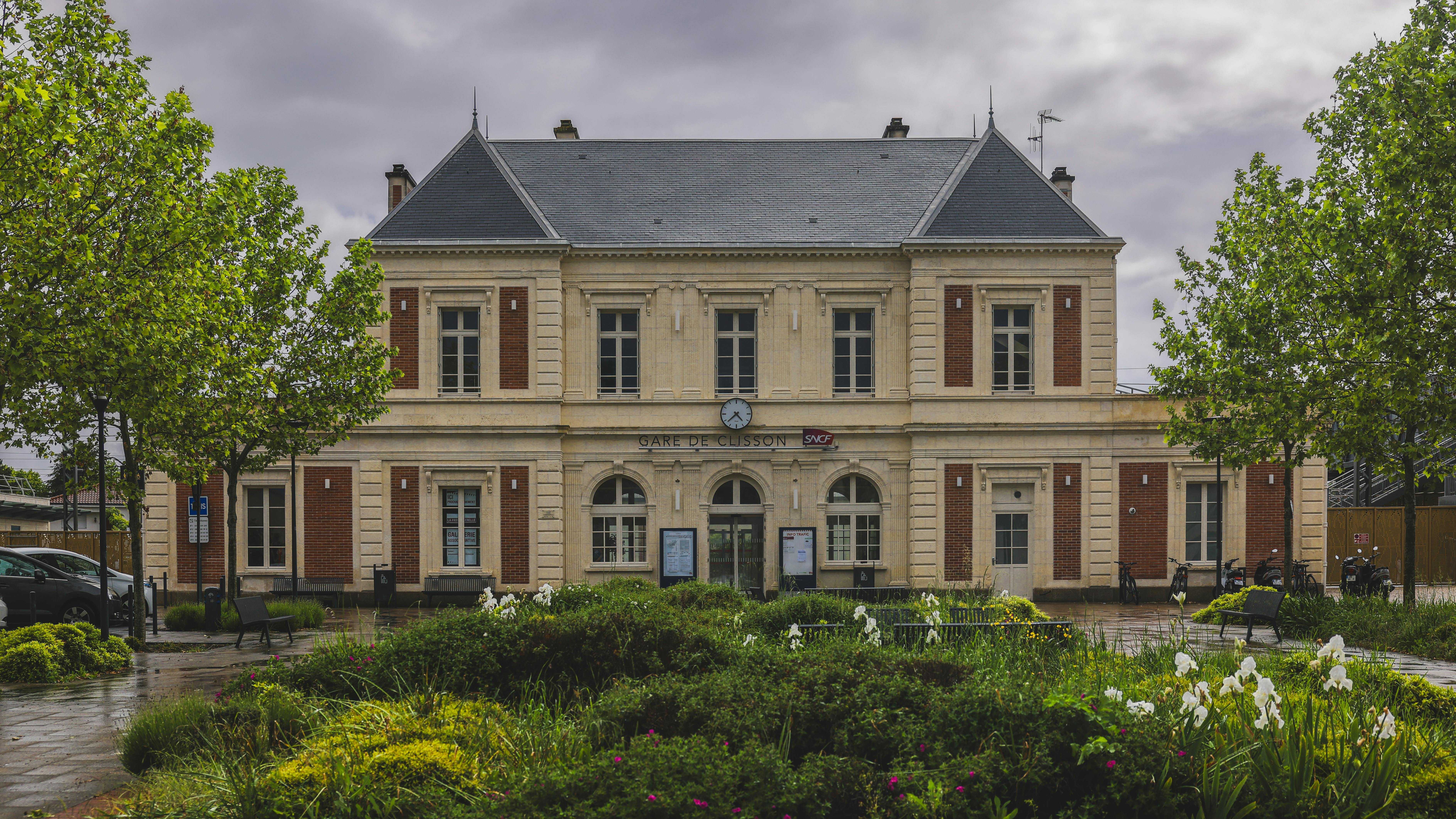

Compiègne
· FR

Compiègne

Compiegne, Hauts-de-France, France

Compiègne, located in the picturesque region of Hauts-de-France, France, is a charming town that offers a delightful mix of history, culture, and natural beauty. Steeped in rich historical significance, Compiègne is a mu…

#Historic city#Palace of Compiegne#Napoleon III#Forest of Compiegne#French architecture
1/3

Top hotels & flights

Hand-picked stays and the best fares into Compiègne.

Top Hotels in Compiègne

Top Flights to Compiègne

Location videos

Real reels from travelers, plus longer watches to get the full picture.

From travelers
Watch & explore

Practical info

The essentials for planning your time in Compiègne.

Currency
€ | EUR | Euro
Population
Information not available.
Languages
French, French
Average weather
Compiègne
Jan
cold
6°1°
Feb
cold
7°1°
Mar
cloud
11°3°
Apr
cloud
14°5°
May
cloud
19°9°
Jun
sun
22°12°
Jul
sun
25°14°
Aug
sun
25°14°
Sep
cloud
21°11°
Oct
cloud
15°8°
Nov
rain
9°4°
Dec
cold
6°2°

Local guide

What travelers love, what to watch for, and a deeper read on Compiègne.

What people love

Compiègne, located in the Hauts-de-France region of France, offers visitors a charming and historical destination with several notable attractions. Some of the pros of traveling to Compiègne include:

  1. Rich history: Compiègne has a long and fascinating history, with landmarks like the Château de Compiègne, a former royal residence, and the Armistice Clearing where the armistice ending World War I was signed.

  2. Beautiful surroundings: The town is situated in a picturesque setting with forests, parks, and the scenic Oise River, providing opportunities for outdoor activities such as hiking, biking, and boating.

  3. Cultural attractions: Compiègne has several museums showcasing art, history, and technology, such as the Museum of the Second Empire and the National Car Museum, which houses a collection of vintage cars.

  4. Gastronomy: The town boasts a variety of restaurants and cafes where visitors can sample traditional French cuisine, including regional specialties like Picardy cheese and cider.

  5. Easy access: Compiègne is easily accessible by train from Paris, making it a convenient day trip or weekend getaway from the capital city.

Overall, Compiègne offers a blend of history, culture, and natural beauty that makes it a rewarding destination for travelers interested in exploring a lesser-known gem in France.

What to know

Some potential cons of traveling to Compiègne in Hauts-de-France, France could include:

  1. Limited public transportation options: Compiègne may have limited public transportation options compared to larger cities, making it more challenging to get around without a car.

  2. Language barrier: While many people in Compiègne may speak English, there could still be a language barrier for some travelers, especially in more rural areas.

  3. Limited tourist infrastructure: Compiègne is not as heavily touristed as some other French cities, so there may be fewer tourist amenities such as hotels, restaurants, and guided tours.

  4. Weather: The weather in Compiègne, like much of northern France, can be unpredictable and rainy, especially in the winter months.

  5. Potential for crowds: While Compiègne may not be as popular with tourists as other French cities, popular attractions such as the Château de Compiègne or the Armistice Clearing could still attract crowds during peak travel seasons.

Overall, these cons should be taken into consideration when planning a trip to Compiègne, but they should not deter you from experiencing all that this charming French town has to offer.

Compiègne, located in the Hauts-de-France region of northern France, has a rich and varied history. Here is a detailed account of its historical significance, notable events, and landmarks:

Historical Overview

  1. Early History:

    • Compiègne has been inhabited since ancient times, with evidence of settlement dating back to the Gallo-Roman period. It was known as Compendium, a name derived from the Latin for "shortcut," as it served as a crossing point on the Oise River.
  2. Medieval Period:

    • Compiègne gained prominence in the early medieval period, particularly under the rule of the Carolingian dynasty. Charlemagne is said to have stayed in Compiègne, and his son Louis the Pious was buried here.
    • In the 9th century, Charles the Bald, a grandson of Charlemagne, constructed a royal palace in Compiègne, further establishing it as a center of power.
  3. Hundred Years' War:

    • During the Hundred Years' War, Compiègne played a significant role. It is perhaps most famously known as the place where Joan of Arc was captured by the Burgundians on May 23, 1430, after her failed attempt to lift the siege of the city. She was later handed over to the English and put on trial.
  4. Renaissance and Beyond:

    • The town continued to be of strategic importance in the following centuries. It was here that King Charles IX issued the Edict of Compiègne in 1570, which was aimed at suppressing the Huguenots.
    • Compiègne also saw visits from many French monarchs, and the Château de Compiègne became a favored royal residence.
  5. Napoleonic Era:

    • Under Napoleon Bonaparte, the Château de Compiègne was restored and became one of his imperial residences. Napoleon's second marriage to Marie Louise of Austria was celebrated here.
  6. World Wars:

    • Compiègne holds a significant place in the history of both World Wars. It was in the forest of Compiègne that the Armistice of 11 November 1918 was signed, ending World War I. This event took place in a railway carriage in the Clairière de l'Armistice (Glade of the Armistice).
    • During World War II, Adolf Hitler chose the same location to sign the Armistice of 22 June 1940, marking the surrender of France to Nazi Germany.

Notable Landmarks

  1. Château de Compiègne:

    • Originally a medieval royal residence, the château was extensively rebuilt under the reigns of Louis XV and Louis XVI. It is a fine example of neoclassical architecture and served as a royal and imperial residence. Today, it is a museum open to the public.
  2. Forest of Compiègne:

    • This large forest is not only a natural reserve but also a historical site due to the signing of the World War I Armistice.
  3. Clairière de l'Armistice:

    • The clearing in the forest where the armistice was signed. A replica of the original railway carriage, which was taken to Germany during World War II and later destroyed, is on display here.
  4. Saint Jacques Church:

    • A Gothic-style church dating back to the 13th century, known for its beautiful architecture and historical significance.
  5. Town Hall (Hôtel de Ville de Compiègne):

    • The town hall is noted for its striking façade and the belfry, which is a symbol of the town's rich civic history.

Notable Figures

  • Joan of Arc: The iconic French heroine was captured here, which marked a turning point in her life and legacy.
  • Charles the Bald: His construction efforts in Compiègne marked the city's importance during the Carolingian era.
  • Napoleon Bonaparte: His association with the Château de Compiègne elevated its status as a significant imperial residence.

Compiègne, with its strategic location and rich history, continues to be an area of cultural and historical interest in France.