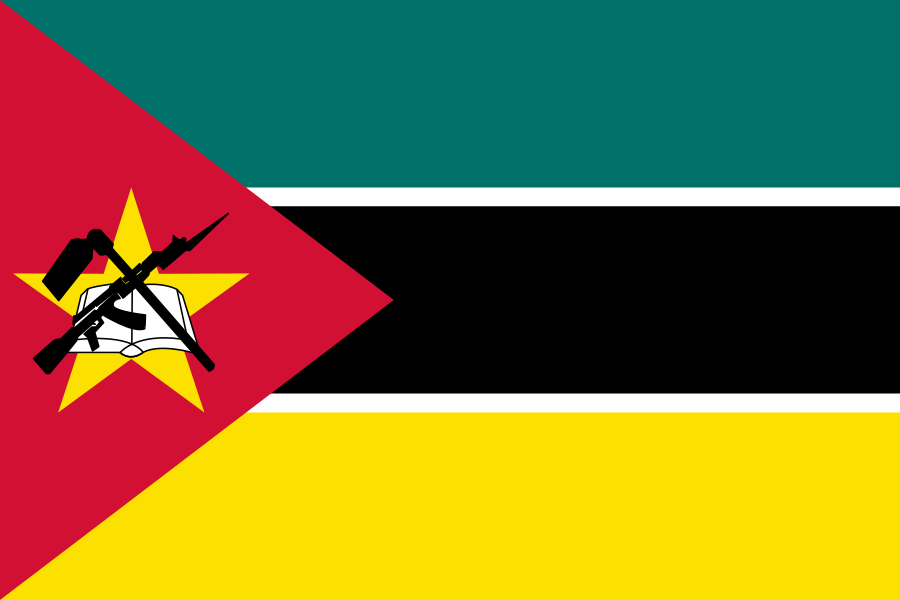
Chibuto is a town and district located in the Gaza Province of southern Mozambique. It has a rich history, influenced by both indigenous cultures and colonial powers.
Early History
The region around Chibuto has been inhabited for centuries, primarily by the Tsonga people and other Bantu-speaking groups. These communities were involved in agriculture, cattle herding, and trade long before the advent of European influence.
Colonial Era
During the late 19th century, Mozambique became a Portuguese colony. Chibuto, like much of Mozambique, fell under Portuguese control. The colonial period was marked by the establishment of plantations and the exploitation of local resources. This era also saw the introduction of Christianity, with missionaries establishing schools and churches.
Independence and Civil War
Mozambique gained independence from Portugal in 1975 after a protracted liberation struggle led by the FRELIMO (Front for the Liberation of Mozambique) movement. However, the country soon plunged into a civil war that lasted from 1977 to 1992, involving the FRELIMO government and the opposing RENAMO (Mozambican National Resistance) forces. During the civil war, many regions, including Chibuto, were affected by violence and instability.
Post-War Development
After the end of the civil war, Mozambique embarked on a path of reconstruction and development. Chibuto has been part of these national efforts, focusing on rebuilding infrastructure, improving education and health services, and fostering economic growth.
Significant Events
- 2000 Limpopo River Floods: Chibuto was severely affected by the floods that devastated large parts of southern Mozambique. The floods displaced thousands of people and destroyed infrastructure.
- Mining Activities: In recent years, Chibuto has gained attention due to its mineral deposits, particularly heavy sands containing ilmenite, rutile, and zircon. These resources have attracted international mining companies and have the potential to boost the local economy.
Important Landmarks
- Local Markets: Traditional markets in Chibuto are vital for the local economy and offer insights into the culture and daily life of its residents.
- Churches and Mission Schools: Some historical mission establishments from the colonial era still exist and serve as important cultural and educational centers.
Prominent Figures
Chibuto has produced several notable figures in Mozambican politics and society, although specific names are not widely recognized on the international stage.
Despite its challenges, Chibuto remains an important part of Mozambique's cultural and historical landscape. The town continues to evolve, balancing its rich heritage with the demands of modern development.
Information not available.