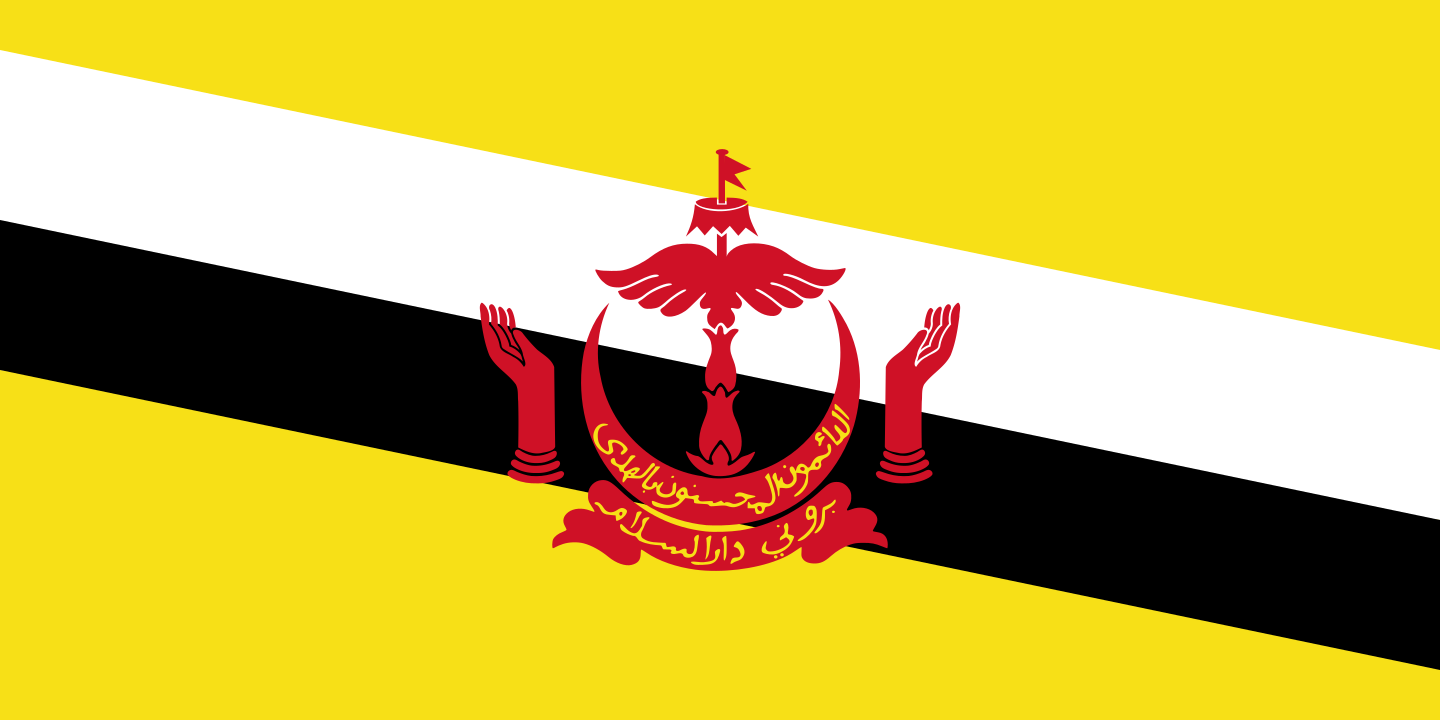
Brunei
· BN

Brunei

Brunei

Discover the Hidden Jewel of Borneo: Brunei Darussalam Nestled on the island of Borneo, tucked between the Malaysian states of Sarawak and Sabah, lies the enchanting Sultanate of Brunei. This small but mighty nation offe…

#Southeast Asia#Monarchy#Oil-rich#Islamic country#Tropical climate
1/4

Top hotels & flights

Hand-picked stays and the best fares into Brunei.

Top Hotels in Bandar Seri Begawan

Top Flights to Bandar Seri Begawan

Popular activities

Tours, tickets and experiences travelers book most in Brunei.

Tours

Exploring Bandar Seri Begawan

Discover the beautiful capital city of Brunei by visiting its famous landmarks and historical sites.

Water Village Exploration

Explore Kampong Ayer, the world's largest water village, by boat.

Shopping

Shopping in Gadong Night Market

Experience local food and crafts at Gadong Night Market, a vibrant and bustling evening market.

Outdoor

Nature Walks in Ulu Temburong National Park

Experience the pristine rainforest environment with guided tours and canopy walks.

Adventure at Bukit Shahbandar Park

Adventure through the trails of Bukit Shahbandar, featuring scenic views and wildlife.

Location videos

Real reels from travelers, plus longer watches to get the full picture.

From travelers
Watch & explore

Practical info

The essentials for planning your time in Brunei.

Currency
B$ | BND | Brunei Dollar
Population
The approximate estimated total population of Brunei is '0.5 million'.
Languages
Malay, English, Chinese
Average weather
Brunei
Jan
rain
30°23°
Feb
rain
31°23°
Mar
rain
31°24°
Apr
rain
32°24°
May
rain
32°24°
Jun
rain
32°24°
Jul
rain
32°24°
Aug
rain
32°24°
Sep
rain
32°24°
Oct
rain
31°24°
Nov
rain
31°24°
Dec
rain
30°23°

Local guide

What travelers love, what to watch for, and a deeper read on Brunei.

What people love

Brunei, located on the island of Borneo in Southeast Asia, offers a unique and culturally rich travel experience. Some of the pros of traveling to Brunei include:

  1. Rich cultural heritage: Brunei boasts a blend of Malay, Chinese, and indigenous cultures, providing visitors with a diverse cultural experience. You can explore traditional markets, visit historical sites such as the Sultan Omar Ali Saifuddien Mosque, and witness traditional ceremonies and festivals.

  2. Pristine rainforests: Brunei is home to vast expanses of untouched rainforests, offering opportunities for eco-tourism and nature lovers. You can explore the Ulu Temburong National Park, go trekking, birdwatching, and experience the diverse flora and fauna of the region.

  3. Safety and cleanliness: Brunei is known for its low crime rate and high levels of safety, making it an ideal destination for solo travelers, families, and those seeking a peaceful vacation. The country is also known for its cleanliness and well-preserved natural environment.

  4. Authentic local cuisine: Food plays a significant role in Bruneian culture, and you can indulge in a variety of delicious local dishes such as Ambuyat, Nasi Katok, and Kolo Mee. The local markets and street food stalls offer a fantastic culinary adventure for food enthusiasts.

  5. Hospitable locals: Bruneians are known for their warm hospitality and friendliness towards visitors. You can expect to be welcomed with open arms and experience genuine interactions with the locals, providing insights into their way of life and customs.

Overall, traveling to Brunei offers a unique opportunity to explore a lesser-known destination with a rich cultural heritage, stunning natural landscapes, and warm hospitality.

What to know

Some potential cons of traveling to Brunei include:

  1. Limited entertainment options: Brunei may not offer as many entertainment and nightlife options compared to other popular tourist destinations. The country follows strict Islamic laws, which restrict certain activities and behaviors.

  2. High cost of living: Brunei is known for its high cost of living, which can make travel expenses relatively expensive for visitors. Accommodation, dining, and transportation costs can be higher compared to other Southeast Asian countries.

  3. Limited public transportation: Brunei's public transportation system is not as developed as in other countries, making it more challenging to get around without a rental car or relying on taxis.

  4. Conservative cultural norms: Brunei follows conservative Islamic traditions, and visitors are expected to respect local customs and dress modestly. Alcohol consumption is also restricted in the country.

  5. Limited tourist attractions: While Brunei has some beautiful mosques, museums, and nature reserves to explore, the country may not have as many tourist attractions compared to neighboring countries like Malaysia or Indonesia.

Please note that these cons are subjective and may not apply to all travelers. It's essential to research and consider your own preferences and expectations when planning a trip to Brunei.

Early History

  • Early Settlements: The territory of modern-day Brunei has been inhabited since at least the 6th century. Early records suggest influences and interactions with Chinese, Indian, and later Islamic civilizations.
  • Founding of Brunei Sultanate: The Sultanate of Brunei was traditionally founded in the late 14th century by Sultan Muhammad Shah, who is considered the first Sultan of Brunei.

The Bruneian Empire

  • 15th-16th Century: Under Sultan Bolkiah (reigned 1485–1524), Brunei reached the height of its power, with influence extending into the Philippines, parts of Borneo, and the Sulu Archipelago.
  • Islamic Influence: During this time, Islam became deeply entrenched in Brunei, and the sultanate was an important center of Islamic culture and trade.

European Contact

  • Arrival of Europeans: The first Europeans to make contact with Brunei were the Portuguese in the early 16th century, followed by the Spanish and later the British and Dutch.
  • Conflict with Spain: In 1578, the Spanish launched an expedition against Brunei, capturing the capital, Kota Batu, but they eventually withdrew.

Decline

  • 17th-19th Century: Brunei’s influence waned due to internal strife and external pressures. Key territories were lost to European powers, and piracy became a problem in the region.
  • British Influence: By the 19th century, British influence grew. In 1847, Brunei signed a treaty with Britain, and in 1888, Brunei became a British protectorate.

20th Century and Independence

  • World War II: Brunei was occupied by the Japanese from 1941 to 1945 during World War II. The post-war period saw the restoration of British rule.
  • Path to Independence: In the post-war period, Brunei experienced political and economic changes. The discovery of oil in the 1920s had already transformed Brunei's economy, and by the mid-20th century, this wealth set the stage for modernization.
  • Independence: Brunei gained full independence from Britain on January 1, 1984. Sultan Hassanal Bolkiah, who ascended to the throne in 1967, became the head of state.

Recent History

  • Economic Development: Post-independence, Brunei focused on developing its infrastructure and economy, relying heavily on oil and gas revenues.
  • Constitutional Changes: In 2004, Sultan Hassanal Bolkiah introduced constitutional amendments to revitalize political structures, including the establishment of a partially elected Legislative Council.

Significant Figures

  • Sultan Muhammad Shah: Founder of the Brunei Sultanate.
  • Sultan Bolkiah: Considered one of the greatest Sultans, under whom Brunei reached its peak.
  • Sultan Hassanal Bolkiah: The current Sultan, known for modernizing Brunei and maintaining its wealth.

Important Landmarks

  • Sultan Omar Ali Saifuddien Mosque: A symbol of modern Islamic architecture, located in the capital, Bandar Seri Begawan.
  • Kampong Ayer (Water Village): Known as the "Venice of the East," this traditional settlement is a significant cultural and historical site.
  • Istana Nurul Iman: The official residence of the Sultan, known as the largest residential palace in the world.

Brunei's history is marked by its transition from a powerful maritime empire to a small but wealthy nation, thanks to its oil and gas reserves. The Sultanate has managed to preserve its traditions while embracing modernization, under the leadership of the royal family.