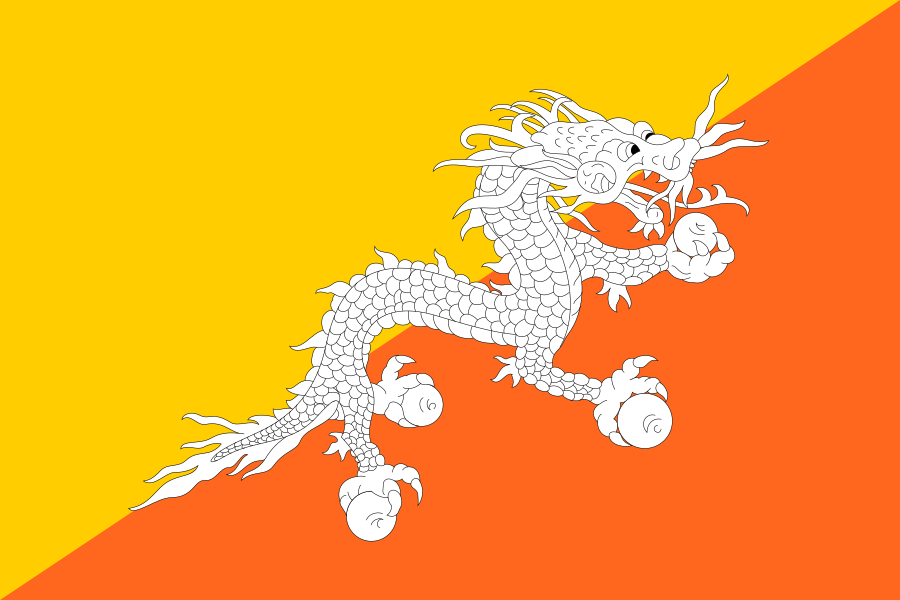
Bhutan
· BT

Bhutan

Bhutan

Discover Bhutan: Where Happiness Hides in the Himalayas Nestled amidst the breathtaking peaks of the Eastern Himalayas lies Bhutan, a country where time seems to move slower and happiness is a way of life. This small, l…

#Himalayas#Buddhist culture#Gross National Happiness#Thimphu#Paro Taktsang
1/19

Top hotels & flights

Hand-picked stays and the best fares into Bhutan.

Top Hotels in Thimphu

Top Flights to Thimphu

Popular activities

Tours, tickets and experiences travelers book most in Bhutan.

Tours

Visit Tiger's Nest Monastery

A iconic Buddhist monastery perched on a cliff, offering breathtaking views and spiritual insight.

Shopping

Shop at Thimphu Handicrafts Market

Experience traditional Bhutanese crafts and textiles in the vibrant capital city.

Outdoor

Hike in the Phobjikha Valley

Explore the beautiful glacial valley known for its scenic beauty and black-necked cranes.

Location videos

Real reels from travelers, plus longer watches to get the full picture.

From travelers
Watch & explore

Practical info

The essentials for planning your time in Bhutan.

Currency
Nu. | BTN | Bhutanese Ngultrum
Population
0.8 million
Languages
Dzongkha, Dzongkha, Nepali, English
Average weather
Bhutan
Jan
cold
12°-2°
Feb
cold
14°0°
Mar
clear
17°4°
Apr
sun
20°8°
May
cloud
23°13°
Jun
rain
25°16°
Jul
rain
25°17°
Aug
rain
25°17°
Sep
cloud
23°15°
Oct
clear
20°10°
Nov
clear
16°4°
Dec
cold
13°-1°

Local guide

What travelers love, what to watch for, and a deeper read on Bhutan.

What people love

Traveling to Bhutan has several advantages, which make it a unique and appealing destination. Here are some of the pros of traveling to Bhutan:

  1. Natural Beauty: Bhutan is known for its stunning landscapes, ranging from high mountains to lush valleys. Traveling to Bhutan offers the opportunity to experience pristine natural beauty and breathtaking scenery.

  2. Cultural Richness: Bhutan has a rich cultural heritage that is well preserved and celebrated. Travelers can explore ancient monasteries, temples, and traditional Bhutanese architecture, providing insight into the country's unique culture and traditions.

  3. Happiness Index: Bhutan is famously known for prioritizing Gross National Happiness (GNH) over Gross Domestic Product (GDP). This focus on well-being and happiness makes Bhutan a welcoming and peaceful destination for travelers seeking a more holistic travel experience.

  4. Limited Tourism: Bhutan has a policy of "High Value, Low Impact" tourism, which means that the number of tourists allowed to visit the country is limited. This helps in preserving the environment and culture while providing a more exclusive and authentic travel experience.

  5. Adventure Activities: Travelers to Bhutan can engage in various adventure activities such as trekking, hiking, and wildlife watching. The country's diverse terrain offers opportunities for outdoor enthusiasts to explore and experience the natural beauty firsthand.

  6. Unique Festivals: Bhutan is known for its vibrant and colorful festivals, such as the famous Paro Tsechu and Thimphu Tshechu. These festivals offer travelers a chance to witness traditional Bhutanese dances, music, and rituals, providing a glimpse into the country's rich cultural heritage.

Overall, traveling to Bhutan offers a unique and enriching experience for those seeking a combination of natural beauty, cultural immersion, and adventure in a country that values happiness and sustainability.

Enjoy your travels to Bhutan!

What to know

Traveling to Bhutan does come with some cons, although they are relatively minor compared to the overall experience. Here are some potential drawbacks to consider:

  1. Cost: Bhutan has a daily tariff for tourists which can be quite high. This fee covers accommodation, meals, guides, and transportation within the country. The cost can be a deterrent for budget travelers.

  2. Limited Independent Travel: Tourists in Bhutan are required to book a tour through a licensed tour operator, and independent travel is not allowed. This can restrict flexibility in your itinerary and limit your ability to explore on your own.

  3. High Altitude: Bhutan is a mountainous country with varying altitudes. Travelers may experience altitude sickness, especially when visiting higher regions such as Paro and Thimphu.

  4. Limited Infrastructure: While Bhutan is developing its infrastructure, some areas may still lack modern amenities and facilities that travelers are accustomed to in other countries.

  5. Limited Connectivity: Internet and mobile phone coverage can be limited in some parts of Bhutan, so staying connected may be a challenge.

  6. Cultural Differences: Travelers may experience culture shock due to the unique customs and traditions of Bhutanese society. It's important to respect and adapt to local norms and practices.

Overall, while Bhutan offers a unique and enriching travel experience, it's essential to be aware of these potential cons before planning your trip.

Bhutan, a small kingdom nestled in the eastern Himalayas, has a rich history characterized by its unique blend of indigenous traditions, Buddhist culture, and a monarchy that has played a central role in shaping its development. Below is a detailed history of Bhutan, including significant events, historical figures, and important landmarks:

Early History

  • Prehistoric Era: Evidence of human habitation in Bhutan dates back to around 2000 BCE. The region was initially inhabited by indigenous tribes, namely the Monpa and Lhop, among others. Little is known about this period due to a lack of written records.

  • Buddhism's Introduction: Buddhism was introduced to Bhutan around the 7th century during the reign of the Tibetan king Songtsen Gampo, who is said to have constructed the first two Buddhist temples in the country: Kyichu Lhakhang in Paro and Jambay Lhakhang in Bumthang.

Medieval Era

  • Guru Rinpoche's Influence: In the 8th century, Guru Padmasambhava, also known as Guru Rinpoche, visited Bhutan and played a pivotal role in spreading Tantric Buddhism. He is a revered figure and many of Bhutan's sacred sites are associated with him.

  • Rise of the Drukpa Lineage: The Drukpa Kagyu school of Tibetan Buddhism became prominent in Bhutan in the 12th century. Lama Phajo Drugom Zhigpo, a significant figure from this school, traveled to Bhutan and established its teachings.

Unification under Zhabdrung Ngawang Namgyel

  • 17th Century Unification: Zhabdrung Ngawang Namgyel, a Tibetan lama from the Drukpa Kagyu lineage, arrived in Bhutan in the early 17th century. He is credited with unifying the region, establishing a dual system of governance (Chöesi), and constructing many dzongs (fortresses) which served religious, administrative, and military purposes. Significant dzongs include Punakha Dzong and Paro Dzong.

  • Military Conflicts: During Zhabdrung's era, Bhutan faced invasions from Tibet and internal strife, but he successfully defended the country and established a national identity.

Theocratic Rule and British Contact

  • Theocratic Governance: After Zhabdrung's death, Bhutan was ruled by a series of spiritual and secular leaders known as the Desi and Je Khenpo, respectively.

  • British Relations: In the 18th and 19th centuries, Bhutan had various conflicts with British India, leading to several treaties. The most notable was the 1865 Treaty of Sinchula after the Duar War, which ceded some territories to the British in exchange for an annual subsidy.

Establishment of the Monarchy

  • Ugyen Wangchuck: In 1907, Ugyen Wangchuck was elected as the first hereditary Druk Gyalpo (Dragon King) of Bhutan, marking the establishment of the Wangchuck dynasty. His reign brought stability and modernization efforts.

  • Treaty of Punakha (1910): This treaty with British India established Bhutan's formal protectorate status, granting Britain control over Bhutan's foreign affairs while assuring internal autonomy.

Modern Era

  • Independence and Development: After India gained independence in 1947, Bhutan renegotiated its relationship with India, culminating in the 1949 Treaty of Friendship, which continued the protectorate status but allowed for increased Bhutanese autonomy.

  • Fourth King, Jigme Singye Wangchuck: Ascending in 1972, he is renowned for introducing the concept of Gross National Happiness (GNH), prioritizing the well-being of citizens over mere economic growth.

  • Democratic Transition: In 2008, under King Jigme Khesar Namgyel Wangchuck, Bhutan transitioned to a constitutional monarchy with its first democratic elections, adopting a constitution that enshrines the principles of GNH.

Important Landmarks

  • Tiger’s Nest Monastery (Paro Taktsang): One of the most iconic sites in Bhutan, this monastery is perched on a cliff and is associated with Guru Rinpoche.

  • Punakha Dzong: Known for its stunning architecture and strategic location at the confluence of two rivers, it served as the administrative center and is a key historical site.

  • Tashichho Dzong: Located in Thimphu, it houses the throne room and offices of the king and the government.

Bhutan's history is marked by its ability to maintain sovereignty and cultural identity despite external pressures, with the monarchy playing a central role in guiding the nation toward modernization while preserving its unique traditions.