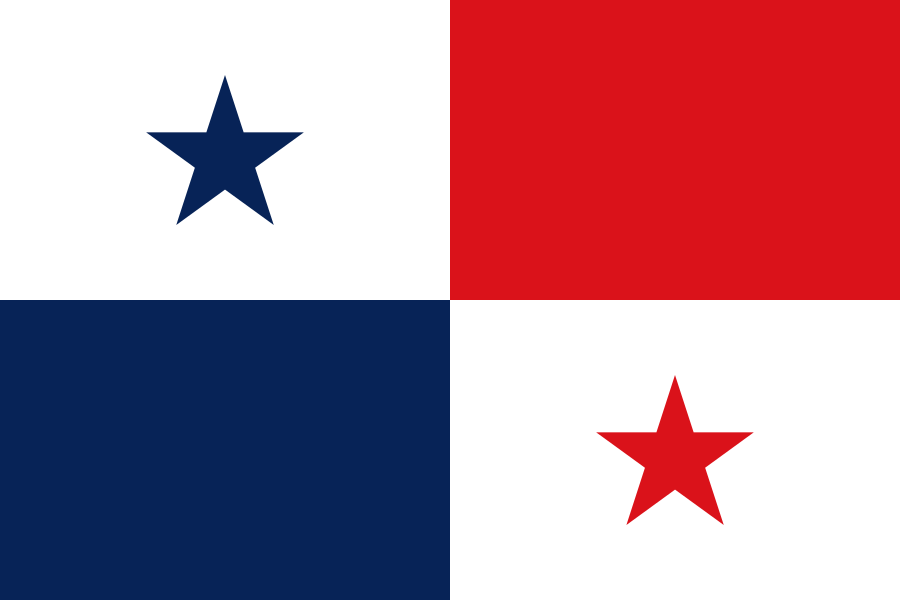
· PA

Ancón

Ancon, Panama, Panama

Ancón, located in Panama, is a charming and historic town that offers a unique blend of natural beauty and cultural richness. Situated on the Pacific coast, Ancón is renowned for its stunning beaches, crystal-clear water…

#Beach destination#Tropical climate#Pacific Ocean#Tourist hotspot#Water sports

Top hotels & flights

Hand-picked stays and the best fares into Ancón.

Top Hotels in Ancón

Top Flights to Ancón

Practical info

The essentials for planning your time in Ancón.

Currency
$ | USD | US Dollar
Population
nan
Languages
Spanish, Spanish
Average weather
Ancón
Jan
sun
27°20°
Feb
sun
28°21°
Mar
sun
28°21°
Apr
sun
26°19°
May
cloud
23°17°
Jun
cloud
21°16°
Jul
cloud
20°15°
Aug
cloud
20°15°
Sep
cloud
21°15°
Oct
cloud
22°16°
Nov
sun
24°17°
Dec
sun
26°19°

Local guide

What travelers love, what to watch for, and a deeper read on Ancón.

What people love

Ancón is a beautiful destination located in Panama, known for its stunning beaches and laid-back atmosphere. Here are some of the pros of traveling to Ancón:

  1. Beaches: Ancón is home to several beautiful beaches with soft white sand and clear blue waters, perfect for swimming, sunbathing, and water sports.

  2. Nature: The region around Ancón is rich in natural beauty, with lush forests, diverse wildlife, and opportunities for hiking and bird-watching.

  3. Relaxation: Ancón offers a peaceful and tranquil atmosphere, making it an ideal destination for those looking to unwind and escape the hustle and bustle of everyday life.

  4. Local culture: Traveling to Ancón provides an opportunity to experience the local Panamanian culture, including traditional cuisine, music, and festivals.

  5. Proximity to Panama City: Ancón is located just a short drive from Panama City, making it easy to combine a beach vacation with city sightseeing and shopping.

Overall, traveling to Ancón offers a perfect blend of natural beauty, relaxation, and cultural experiences, making it a great destination for a memorable vacation.

Enjoy your trip to Ancón!

What to know

Some potential cons of traveling to Ancón, Panama could include:

  1. Limited Tourist Infrastructure: Ancón may not have as many tourist amenities, accommodations, and dining options compared to more popular tourist destinations in Panama. This could lead to limited choices for visitors in terms of accommodations, restaurants, and activities.

  2. Language Barrier: While many people in Ancón may speak some English, the primary language spoken is Spanish. Travelers who do not speak Spanish may face challenges in communicating with locals and navigating the area.

  3. Weather: Panama can experience heavy rainfall during certain times of the year, which could impact outdoor activities and sightseeing in Ancón. Travelers should be prepared for unpredictable weather conditions.

  4. Safety Concerns: While Panama is generally considered safe for tourists, it is always important to remain vigilant and take precautions to avoid petty crimes such as theft and scams, especially in more remote or less touristy areas like Ancón.

  5. Limited Transportation Options: Getting around Ancón may be more challenging compared to larger cities in Panama. Public transportation options could be limited, so travelers may need to rely on taxis or rental cars to explore the area.

Please note that these potential cons are general considerations and may not apply to every traveler's experience in Ancón. It is always recommended to conduct thorough research and plan accordingly before traveling to any destination.

Ancón, located in Panama City, Panama, is a historically significant area with a rich past tied to both the construction of the Panama Canal and the development of Panama as a nation. Here is a detailed history of Ancón and its significance:

Early History

  • Pre-Colombian Era: The area that is now Ancón was originally inhabited by indigenous peoples before the arrival of Europeans.
  • Spanish Colonial Period: During the colonial era, Panama was part of the Spanish Empire, but the specific area of Ancón was not significantly developed until much later.

19th Century

  • United States Interest: In the 19th century, the idea of constructing a canal through Central America to connect the Atlantic and Pacific Oceans began to gain interest, with Panama being a significant location due to its geographic position.

Panama Canal Era

  • French Attempt: In the late 19th century, the French, under Ferdinand de Lesseps, attempted to construct a canal in Panama. Although ultimately unsuccessful due to engineering challenges and disease, this effort marked the beginning of significant international interest in the region.
  • American Control and Construction: In 1904, following Panama's independence from Colombia and the signing of the Hay-Bunau-Varilla Treaty, the United States took control of the canal project. Ancón became a central area during the construction of the Panama Canal. The U.S. established the Panama Canal Zone, and Ancón was a key administrative and residential area for American workers and officials.

20th Century

  • Ancón Hill: One of the most prominent landmarks in Ancón is Ancón Hill (Cerro Ancón), which rises 654 feet and offers panoramic views of the city and the canal. This hill has become a symbol of Panamanian sovereignty and patriotism. In 1977, the Torrijos-Carter Treaties were signed, which agreed to transfer control of the Panama Canal from the U.S. to Panama by the end of 1999. The flag of Panama was raised on Ancón Hill to symbolize Panamanian control.
  • Gorgas Hospital: Another significant site in Ancón is the Gorgas Hospital, known initially as Ancon Hospital. Established by the U.S. to treat workers and control diseases like yellow fever and malaria, it was named after William C. Gorgas, a key figure in making the canal zone habitable.
  • Albrook Air Force Station: Adjacent to Ancón, the Albrook Air Force Station was a significant U.S. military base in the Canal Zone. It played an essential role during World War II and the Cold War before being handed over to Panama.

Modern Era

  • Post-Transfer Developments: After the transfer of the canal to Panama, Ancón has continued to develop as a residential and commercial area. It retains much of its historic architecture and is a sought-after area for its cultural and historical significance.

Cultural and Historical Significance

  • National Symbolism: Ancón is an emblem of Panamanian independence and resilience. The raising of the Panamanian flag on Ancón Hill remains a potent symbol of national pride.
  • Tourism and Heritage: Today, Ancón is visited for its historical sites, such as Ancón Hill, which offers hiking trails and views of Panama City and the canal. The area blends historical significance with natural beauty, making it a unique part of Panama City.

Ancón’s history is deeply intertwined with the construction and operation of the Panama Canal, symbolizing both international collaboration and Panamanian sovereignty.